


Photography Basics 6 – Exposure Compensation
The exposure meters used in cameras measure the amount of light reflected off the subject towards the camera. Digital cameras can have different modes, for example metering for the full scene, centre weighted (more emphasis on the central area), or spot metering (metering on a very small area). Most of the time the metering is pretty accurate but…
…reflective light meters are calibrated to middle grey (like pavements) and this means that in scenes with a lot of brightness (like shooting a snow scene or against a bright sky) or dark tones (like at night) the camera will render the whites or blacks as middle grey.
In these situations you can use your cameras exposure compensation feature which allows you to adjust your cameras meter reading by up to (usually) plus or minus three stops (see the previous post in the series for an explanation of what a stop is).
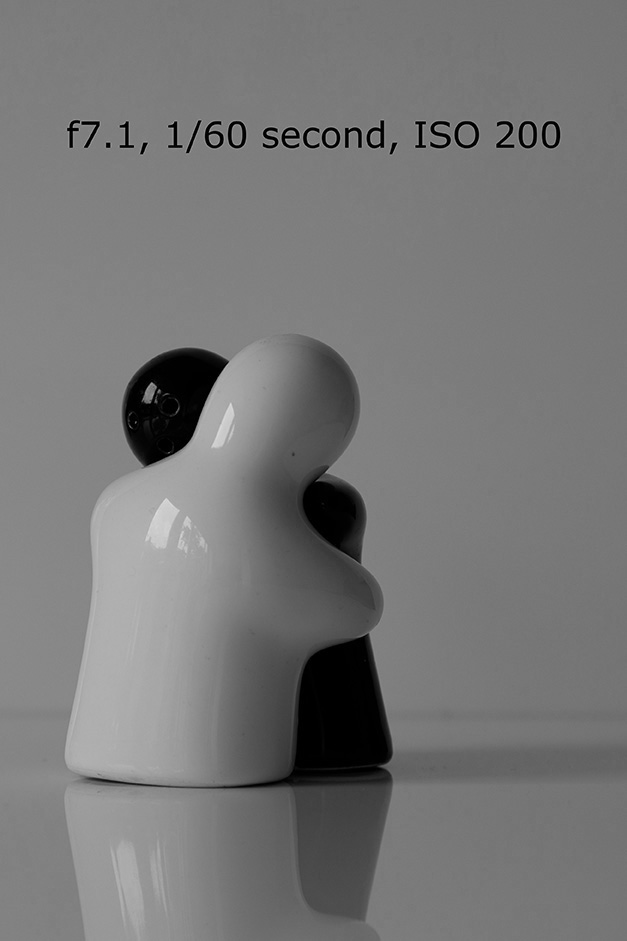
The first picture was taken on a white background with the camera in semi automatic mode (in this case, I set the shutter speed letting the camera select the aperture). The camera has metered for middle grey and the picture is under exposed.
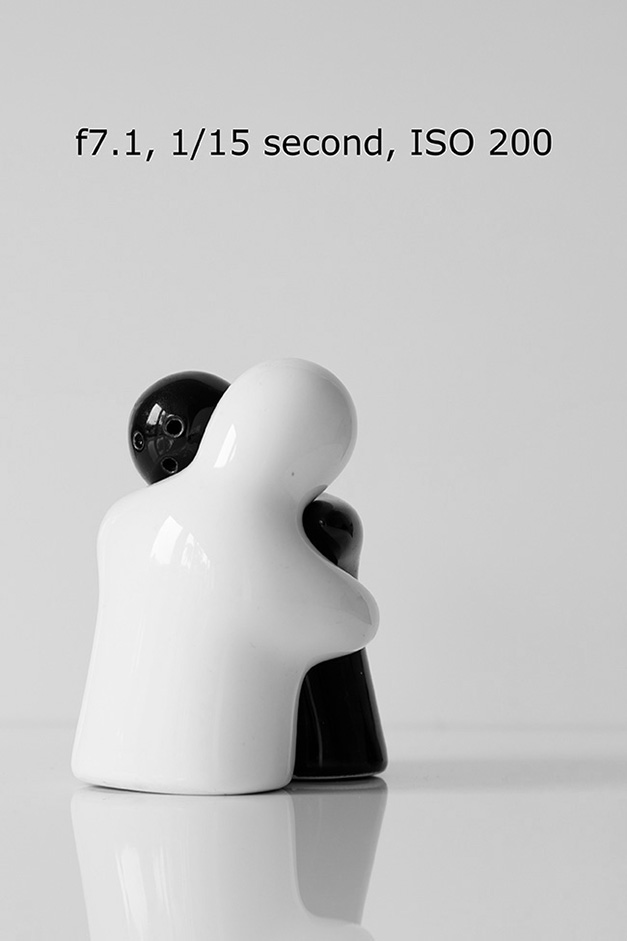
In the second picture I decreased the shutter speed by two stops allowing more light to reach the camera sensor.
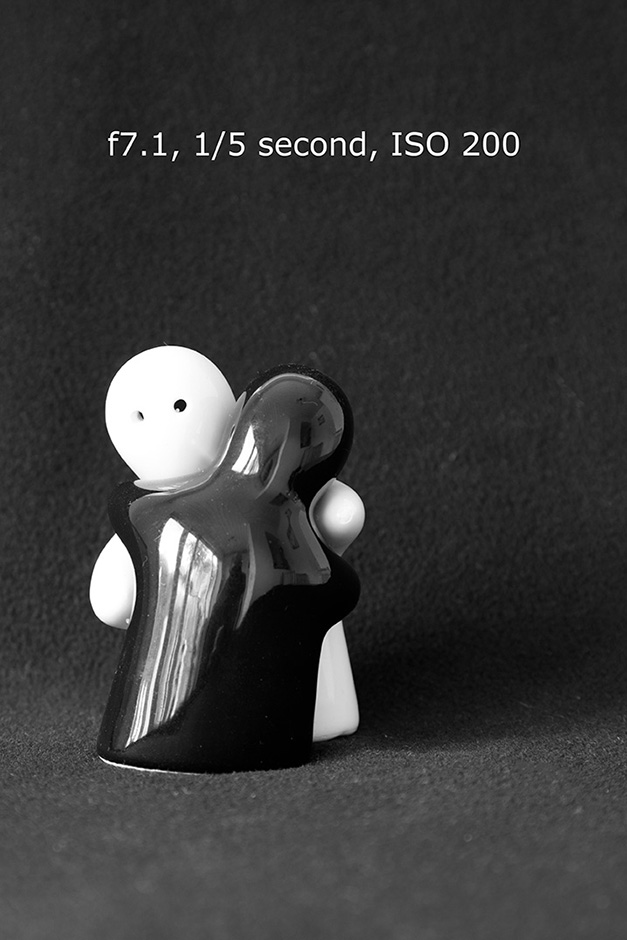
For the third picture using a black background the camera was in semi automatic mode (in this case, I set the aperture letting the camera select the shutter speed). Again the camera has metered for middle grey but this time the picture is over exposed.
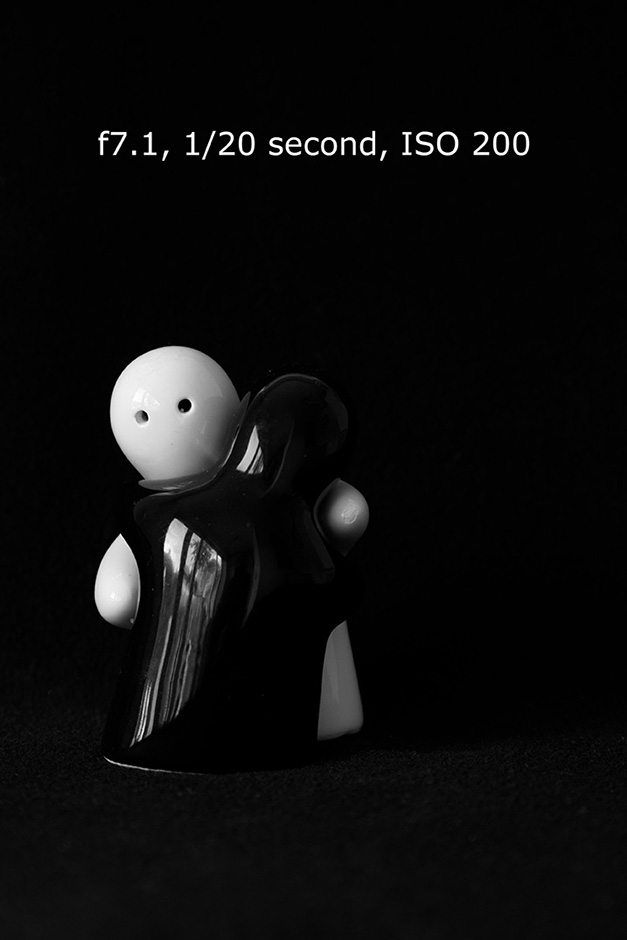
In the fourth picture I increased the shutter speed by two stops to reduce the amount of light reaching the sensor.
As a general rule white reflects light and can result in underexposure, black absorbs light and can result in overexposure.
However, this varies depending upon how much white or black is in the shot, how reflective it is (a matt black surface will absorb more light than a reflective black surface for example) and on the metering mode used so you may have to experiment to get the result that you’d like.
If you’d like to know more about this and other aspects of photography there are more details here
lets chat about your perfect image
Get in touch with Antony today to see how you can work together to capture your perfect picture.